

Fall and early winter bring cool nights to hog farms across the US, and keeping piglets at a steady, safe temperature is one of your top priorities. Most producers already know BR38, BR40 and PAR38 heat bulbs are the go-to choice for farrowing crates and brooder zones. But many overlook one simple piece that shapes how well your heat setup works: the heat lamp fixture.
Not all heat lamp fixtures perform the same. The material you choose changes heat reflection, service life, safety and your long-term farm maintenance work. Let's break down the real differences between aluminum fixtures and plastic fixtures, so you can match the fixture to your barn conditions.
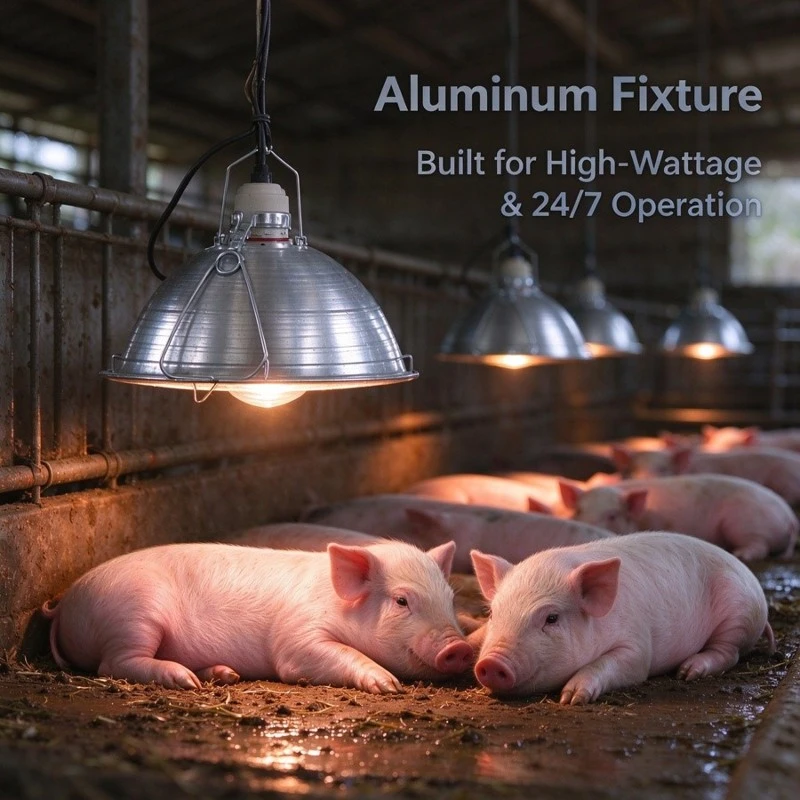
Aluminum heat lamp fixtures are built for high-heat, continuous use. Polished aluminum delivers excellent heat reflection, directing infrared warmth down evenly toward the resting area instead of letting heat scatter sideways. That means your BR38, BR40 or PAR38 bulbs work more efficiently, and you get more consistent temperatures for piglets. Aluminum stands up well to the humid, ammonia-rich air inside pig barns. It won't soften, warp or yellow under long hours of high bulb heat, and it resists aging even when you run the heat lamps every night through the cold season. The tradeoff is that aluminum is conductive, so proper fixture grounding is required. It is heavier and has a higher upfront cost. It is the preferred pick for high-wattage heat lamps, permanent farrowing barns and setups that run 24/7.
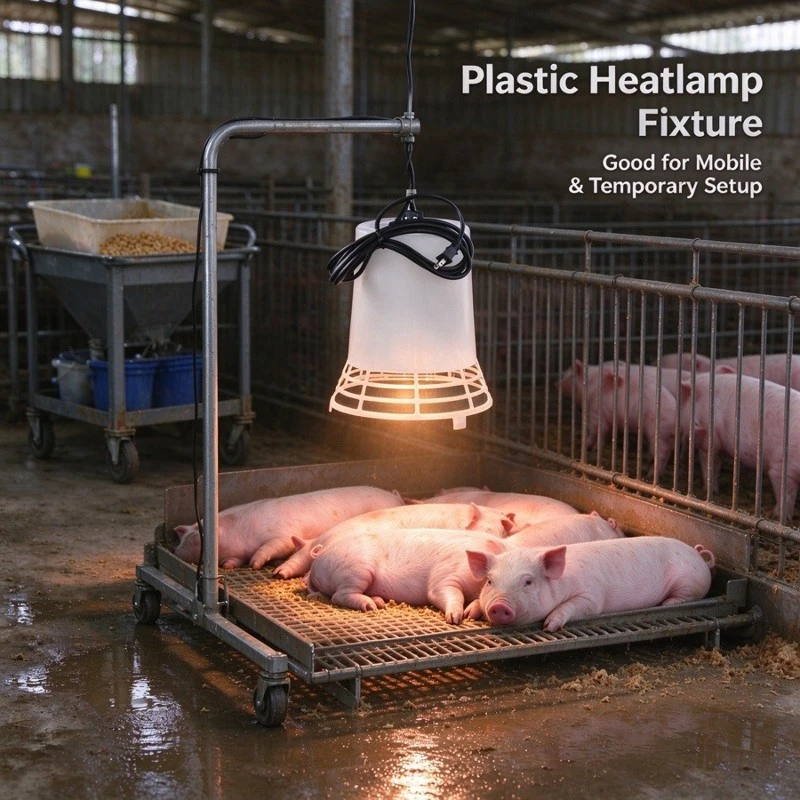
Plastic heat lamp fixtures are lightweight and budget-friendly. A key advantage of quality heat-resistant plastic is that it is naturally insulating and corrosion-resistant. It will not conduct electricity, lowering electric shock risks in damp barn spaces, and it holds up well against ammonia, manure splash and many common farm chemicals. Good heat-stabilized plastic fixtures are less likely to dent if bumped by equipment, feed carts or livestock movement. They are easy to handle during quick fixture swaps and temporary brooding pens. But plastic has clear limits. Even heat-stabilized plastic will gradually degrade with prolonged close exposure to high wattage bulbs. Over time, you may see discoloration, brittleness or warping, which hurts heat distribution and creates safety risks. Plastic fixtures fit better for low-wattage bulbs, short-term seasonal use, mobile nursery setups or operations that rotate brooder zones often.
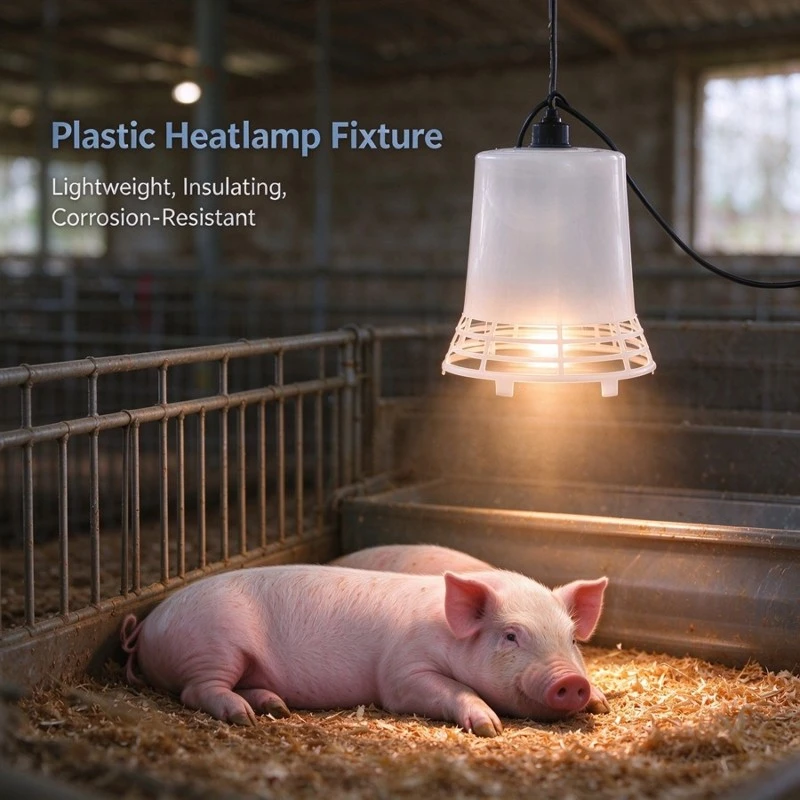
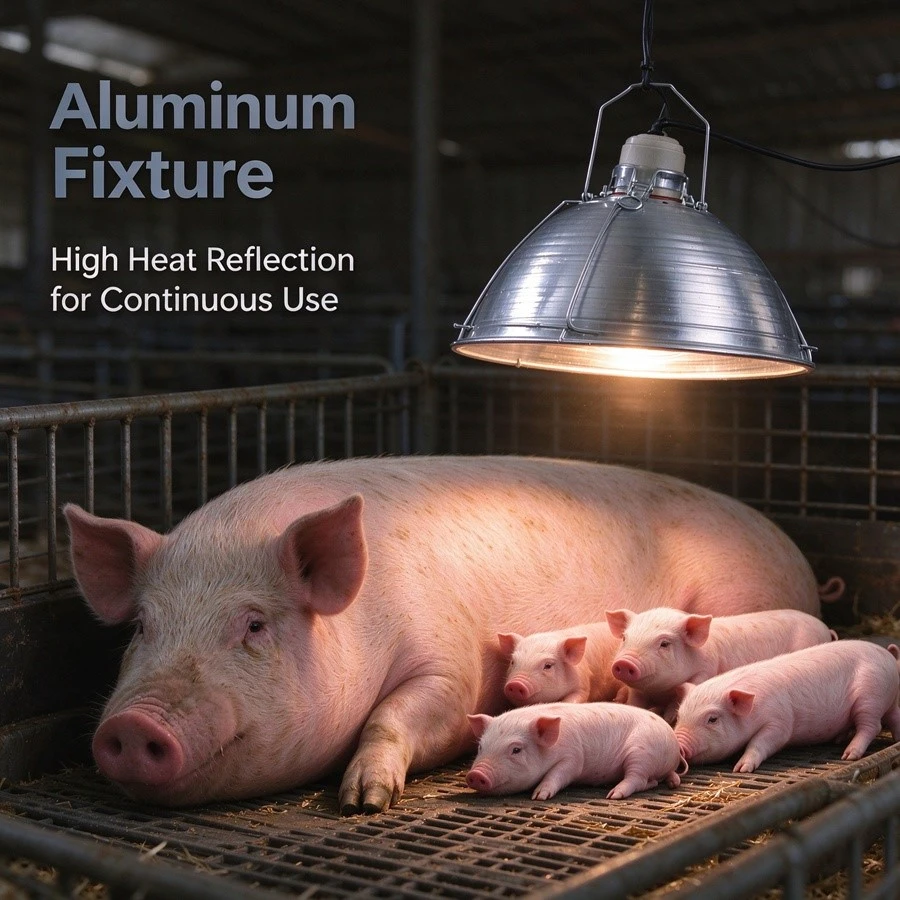
So how do you decide? If you run permanent farrowing barns, rely heavily on BR40 or high-power PAR38 heat bulbs, and need stable, consistent heat night after night, aluminum fixtures are the smarter investment. If your barn has high moisture levels, you value electrical insulation and corrosion resistance, you need portable brooder stations, use lower-wattage BR38 bulbs, or want a cost-effective option for temporary seasonal heating, a premium heat-resistant plastic fixture will serve you well.
Every barn layout and production schedule is different. We supply both aluminum and plastic heat lamp fixtures compatible with BR38, BR40 and PAR38 heat bulbs, and we also support custom sizes for special farm fixture requirements. Feel free to reach out to us for details.


